Many individuals approach their workday like a game of Tetris, reacting to falling blocks until the screen is full. They mistakenly equate a lengthy to-do list with a strategic plan. Research indicates that over 82% of professionals are working without a formal system in place.
Task management goes beyond just maintaining an updated to-do list. It involves the ability to plan work, prioritize what’s important, and maintain control when faced with numerous competing demands. Strong task management skills enable work to progress smoothly, while weak skills lead to a sense of urgency and a decline in quality.
This guide delves into the task management skills that truly enhance work manageability, offering practical ways to enhance them through systems and tools like TMetric.
Summary
- Understanding the core components of task management skills.
- Discovering how task management can enhance productivity and reduce stress.
- Developing essential skills such as planning, prioritization, scheduling, and follow-through.
- Implementing practical methods to effectively manage and organize work.
- Avoiding common habits that lead to overload, missed deadlines, and reactive work.
What are task management skills?
Task management skills are practical habits that aid in translating work from concept to completion. They encompass planning, prioritizing, organizing, estimating time, monitoring progress, and maintaining focus to achieve the desired outcomes.
These skills are applicable to individual workloads as well as team-based settings where multiple individuals rely on shared timelines, handoffs, and clear responsibilities. Task management is not merely a single “soft skill” but a series of daily choices that influence how effectively work is organized, how visible priorities remain, whether deadlines are met, and how consistently tasks are executed under real-world conditions.
Importance of task management skills
Effective task management skills empower individuals to have better command over their workload. This results in clearer priorities, fewer missed deadlines, smoother coordination, and increased accountability for tasks accomplished.
Without these skills, work quickly becomes reactive, with individuals shifting between emails, meetings, messages, and unfinished tasks without a structured system for determining which tasks deserve immediate attention. According to Asana’s 2025 Anatomy of Work Index, knowledge workers spend 60% of their time on coordination, status updates, meetings, and other “work about work” instead of engaging in focused, skilled work.
The repercussions extend beyond individual productivity to impact team performance negatively. Poor task management within teams leads to delays, duplicated efforts, missed handoffs, unclear responsibilities, and other challenges.
Key components of task management skills

Task management comprises a few fundamental skills that aid individuals in staying organized and completing work effectively.
1. Planning and organization
Planning involves breaking down work into manageable steps and arranging them in the correct sequence. Organization ensures that tasks, notes, deadlines, and files are centralized to prevent anything from being misplaced or forgotten.
2. Prioritization and decision-making
Prioritization entails determining which tasks require immediate attention and which can be deferred. This approach helps individuals focus on crucial work rather than reacting to every interruption.
3. Time management and scheduling
Effective task management necessitates realistic time estimation for tasks. Scheduling helps allocate time for important tasks before daily distractions such as meetings and emails consume the day.
4. Tracking and follow-through
Tracking aids in keeping up with deadlines, progress, and pending work. Follow-through ensures that tasks are completed rather than left unfinished or delayed.
Why is task management important?
Modern work environments are rife with interruptions, shifting priorities, and constant distractions. Sound task management enables individuals to stay organized and focused instead of being reactive to every new demand.
Boosting productivity
Effective task management promotes clarity and structure in work. Without a system in place, individuals may spend their days jumping between emails, meetings, messages, and incomplete tasks. Research highlighted by the American Psychological Association indicates that frequent task switching can decrease productivity by up to 40%.
Reducing stress
Much of work-related stress stems from feeling scattered or uncertain about what task to tackle next. Centralizing tasks within a single system helps reduce mental clutter and makes workloads more manageable.
Improving collaboration
Task management also influences team collaboration. Clear task ownership, visible deadlines, and reliable follow-through facilitate seamless project progression, whereas poor organization leads to delays, confusion, and duplicated efforts.
Modern work environments are full of interruptions, evolving priorities, and conflicting deadlines. Effective task management enables individuals to stay organized and productive instead of constantly reacting to the next task at hand.
Examples of task management skills
Here are some key examples of task management skills that impact how individuals organize, prioritize, and complete their work. Mastering these skills can significantly enhance productivity, focus, and day-to-day workload management.
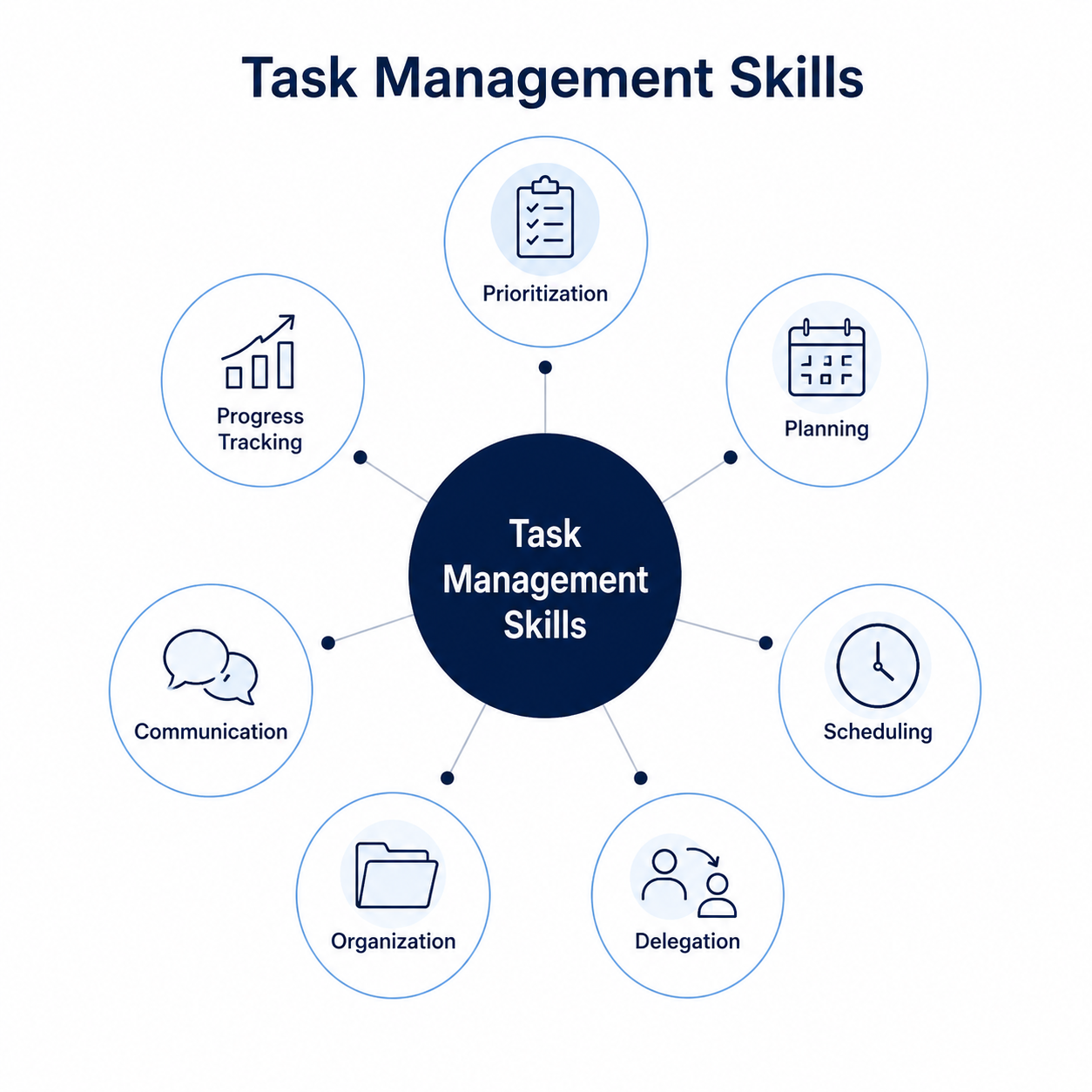
Some individuals appear busy throughout the day yet accomplish very little of importance. The issue often lies not in effort but in how the work is managed.
Prioritization
Many tasks seem urgent when they are not truly important. Prioritization involves determining what truly propels progress before getting bogged down by minor requests.
ExampleA project manager addresses the task holding back the team first instead of spending the morning responding to low-priority emails.
Delegation
Individuals with weak task management skills often attempt to handle everything themselves, leading to project delays.
ExampleA team leader delegates research tasks to a junior team member, allowing them to focus on decisions that require their expertise.
Time management
Some tasks can consume a significant portion of the day without proper structure. Meetings are particularly adept at this.
ExampleA developer blocks out two uninterrupted hours every morning for coding as they know that constant interruptions impede coding progress.
Organization
Disorganized work results in scattered thoughts. When tasks are scattered across sticky notes, emails, chat messages, and memory, things inevitably slip through the cracks.
ExampleA consultant consolidates all deadlines and project tasks in one location rather than attempting to mentally track everything.
5. Communication
Effective task management strategies hinge on clarity: defining requirements early, flagging blockers, and keeping stakeholders updated. This transparency ensures no surprises for the entire team.
Example
A designer notices a change in a project brief and promptly updates the client and task timeline instead of silently accommodating scope changes.
6. Adaptability
Priorities and deadlines are subject to change. Adaptability involves swiftly readjusting when new tasks arise without losing sight of existing commitments.
Example
When faced with a client emergency, a marketer reschedules a planned product launch by a day and communicates the change proactively to prevent both projects from suffering.
Task management tips: How to enhance your task management skills
Improving task management primarily entails cultivating consistent habits that simplify work organization and completion.

Establish clear goals
Ambiguous tasks are challenging to begin and easy to overlook. Defining tasks with specific outcomes and deadlines ensures a clear understanding of what constitutes completion.
Utilize a task management system
Tracking priorities, deadlines, and progress is more manageable when all tasks are consolidated in a single trusted system. Tools like TMetric and similar platforms integrate tasks with time tracking and workload visibility.
Break large tasks into smaller steps
Segmenting significant projects into smaller actions makes them more manageable. Clear step-by-step instructions reduce overwhelm and facilitate task initiation.
Regularly review priorities
Given that priorities frequently change, weekly reviews enable alignment of workload with the most crucial tasks.
Establish achievable deadlines
Successful task management involves planning for actual capacity rather than ideal scenarios. Accounting for interruptions, revisions, and unforeseen tasks is essential.
Minimize multitasking
Frequent task switching diminishes focus and hampers work progress. Completing one task before moving on to the next typically results in improved speed and quality.
Learn to say ‘No’
Accepting too many tasks leads to missed deadlines and unnecessary stress. Effective task management sometimes entails postponing tasks, delegating, or renegotiating priorities.
Common task management mistakes to avoid
Most challenges in task management stem from recurring habits that subtly disrupt focus and organization.
Treating everything as urgent
Perceiving every task as urgent results in overlooking essential work amidst constant reactions and interruptions. Prioritization helps distinguish critical deadlines from noise.
Scattering tasks across multiple platforms
Tasks scattered across emails, sticky notes, chats, and memory are prone to getting lost. Centralizing all tasks in a single trusted system streamlines task tracking and management.
Neglecting priority reviews
As priorities shift frequently, a task list that isn’t reviewed regularly becomes outdated and fails to reflect actual priorities.
Overcommitting
Agreeing to more tasks than one can handle leads to missed deadlines, compromised work quality, and unwarranted stress. Effective task management includes knowing when to delay, delegate, or decline tasks.
Enhance task management skills with TMetric
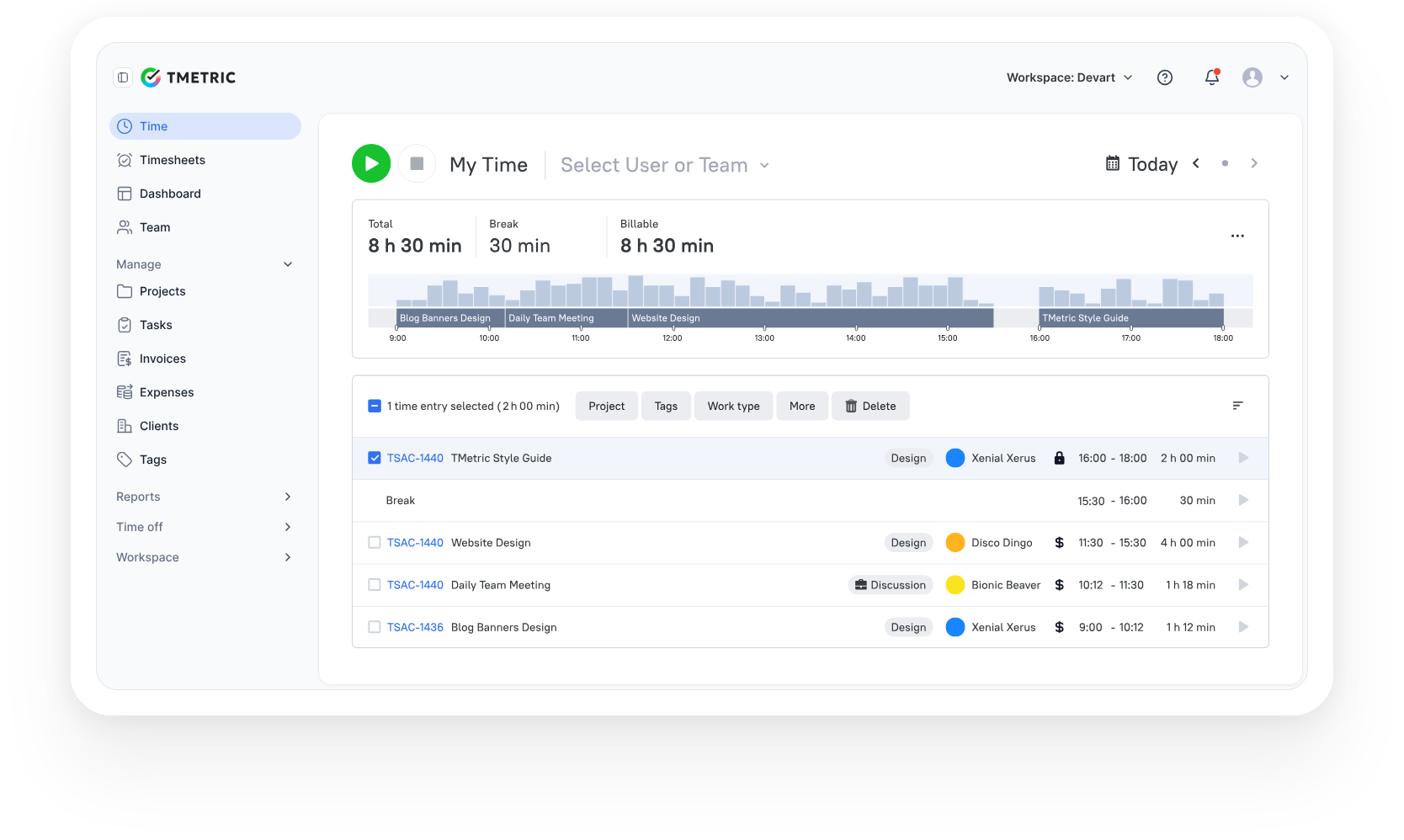
Task management skills are easier to refine when work is visible. This is where TMetric comes in.
TMetric is a task manager integrated with time tracking designed for professionals and teams seeking enhanced visibility into the correlation between time and work. Users can create and organize tasks within projects, track time for specific items, monitor deadlines, and evaluate how time is utilized. This real-time feedback aids in identifying patterns, such as tasks consistently exceeding estimated durations, interruptions during work blocks, and recurring priority shifts.
For managers, TMetric offers team-level visibility, showcasing task assignments, workload distribution, and project budget tracking. For individuals, it fosters accountability in aligning plans with execution.
TMetric seamlessly integrates with over 50 tools, including Jira, Asana, Trello, Notion, Slack, and GitHub, allowing users to track time directly from their preferred platforms. It is accessible on the web, desktop, and mobile devices, with browser extensions available for Chrome, Firefox, Edge, and Safari. A comprehensive 14-day free trial is offered without requiring a credit card.
Begin using TMetric now and establish a workflow where tasks, time, and deadlines are consistently aligned.
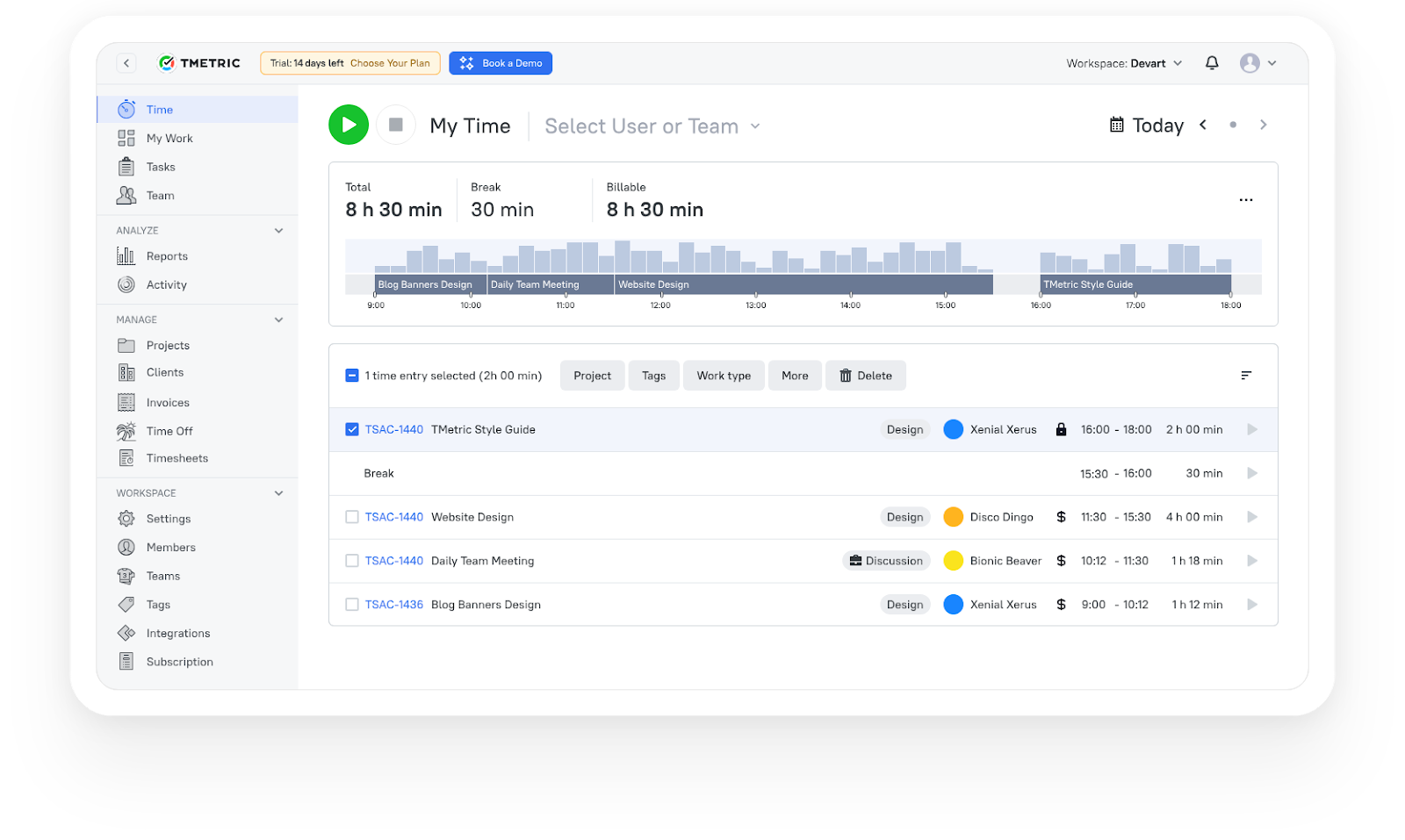
3,000+ companies, teams, and individuals worldwide use TMetric to track time, manage work