Overtime is a common occurrence in many organizations, but it varies among roles and individuals. While some roles may have minimal overtime, others consistently have extra work without additional pay or recognition.
This raises the question of who is working the most overtime and where it is coming from. Generally, production and industrial workers, technical and engineering roles, and mid-to-senior employees bear the heaviest burden of overtime. Managers and tech workers also tend to work extra hours without compensation.
However, it is essential for HR and operations teams to understand not just who works the most overtime but also why it is concentrated in certain roles and experience levels. This report breaks down overtime by industry, role, and experience level to show where extra hours accumulate, how much is unpaid, and why these trends matter for workforce planning, productivity, and retention.
Overtime Hours: Meaning, Calculation, Pay Rates, and Compliance
Overtime hours are the time worked beyond standard norms. Learn how to calculate overtime, what pay rates apply, the common rules, and how to automate tracking.
Key takeaways
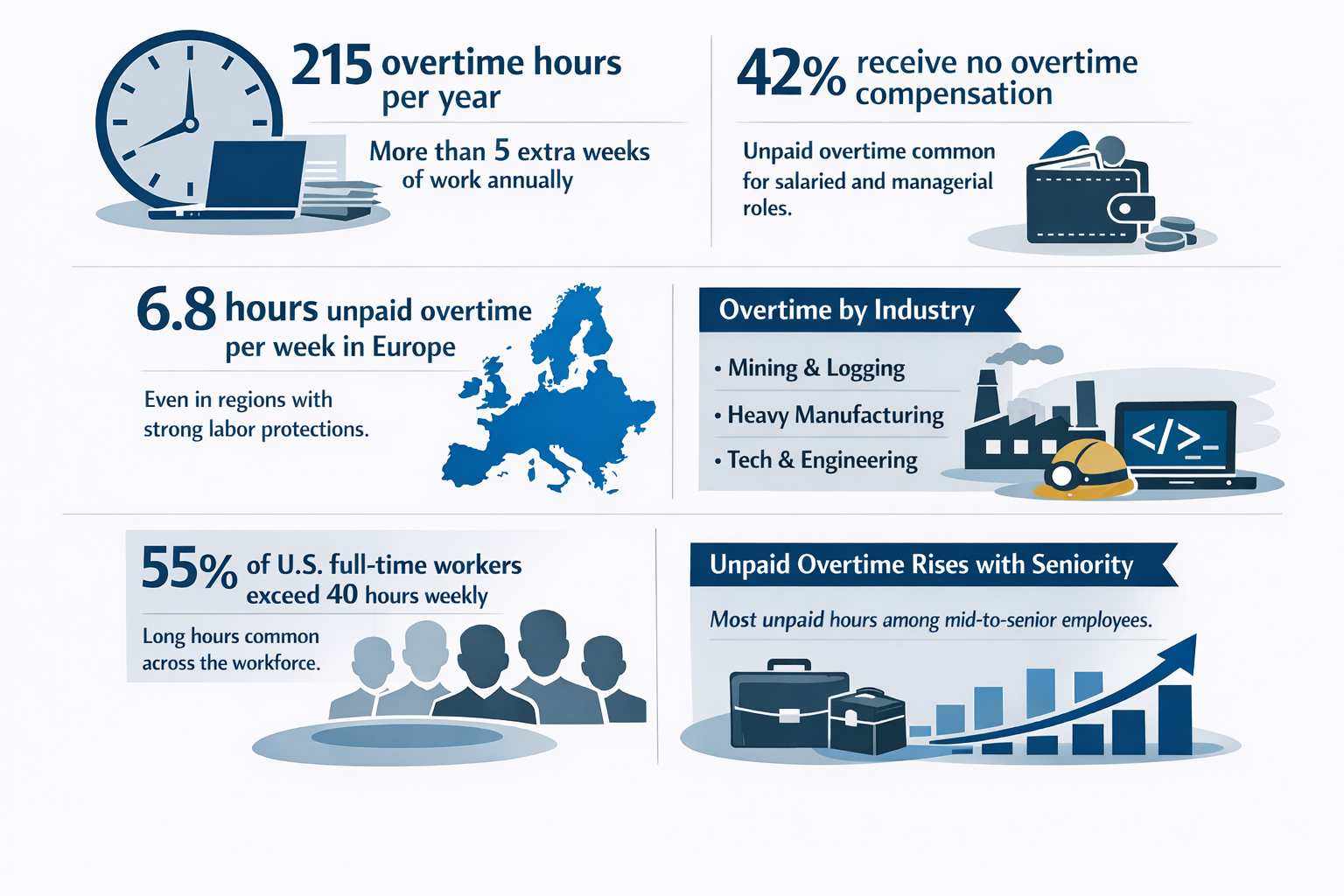
Behind productivity metrics and delivery timelines lies a significant amount of unpaid and extended work. The data below illustrates how overtime manifests, who works it most, and where it remains unpaid.
- 215 overtime hours per year on average
Employees work the equivalent of more than five extra weeks each year, making overtime a routine part of modern work rather than an exception.
- 42% receive no overtime compensation
A significant share of overtime goes unpaid, particularly among salaried and managerial roles, turning extra hours into hidden labor.
- 6.8 hours of unpaid overtime per week in Europe
Unpaid overtime remains common even in regions with stronger labor protections, pointing to cultural and operational drivers beyond formal policy.
- Overtime clusters by industry
Mining, logging, and heavy manufacturing report the longest workweeks, showing how industry structure and production pressure shape overtime expectations.
- Tech and engineering roles regularly exceed 40 hours
Software developers and technical teams, especially in startups, often work extended hours tied to delivery cycles rather than formal overtime planning.
- More than half of U.S. full-time workers exceed 40 hours weekly
Long workweeks are common across the full-time workforce, not limited to high-pressure or frontline roles.
- Mid-to-senior employees work the most unpaid overtime
Overtime tends to increase with seniority, as managers and experienced professionals absorb coordination, planning, and off-hours decision-making work that often goes untracked.
Employee Overtime Tracker App
Track employee overtime hours with ease using TMetric. Get detailed timesheets, reports, and alerts to manage workloads and compliance. Start for free today.

Overtime trends by industry and regional workforce patterns
Overtime patterns vary sharply by industry, reflecting the underlying structure of work. Some industries incorporate overtime into their operating model, while others rely less on extended hours.
Mining, logging, and heavy industry
In the U.S., workers in the mining and logging industry averaged about 43.7 hours per week in early 2025, indicating sustained workload pressure in sectors with limited flexibility due to production schedules and safety procedures.
Manufacturing industries also show a similar pattern, with some subsectors reporting high average weekly overtime hours.
In these environments, overtime is a structural necessity rather than a short-term spike.
These figures highlight that industry-specific overtime is shaped by operational realities.
💡
In early 2025, workers in Mining & Logging averaged about 43.7 hours per week
Europe vs. U.S. workforce patterns
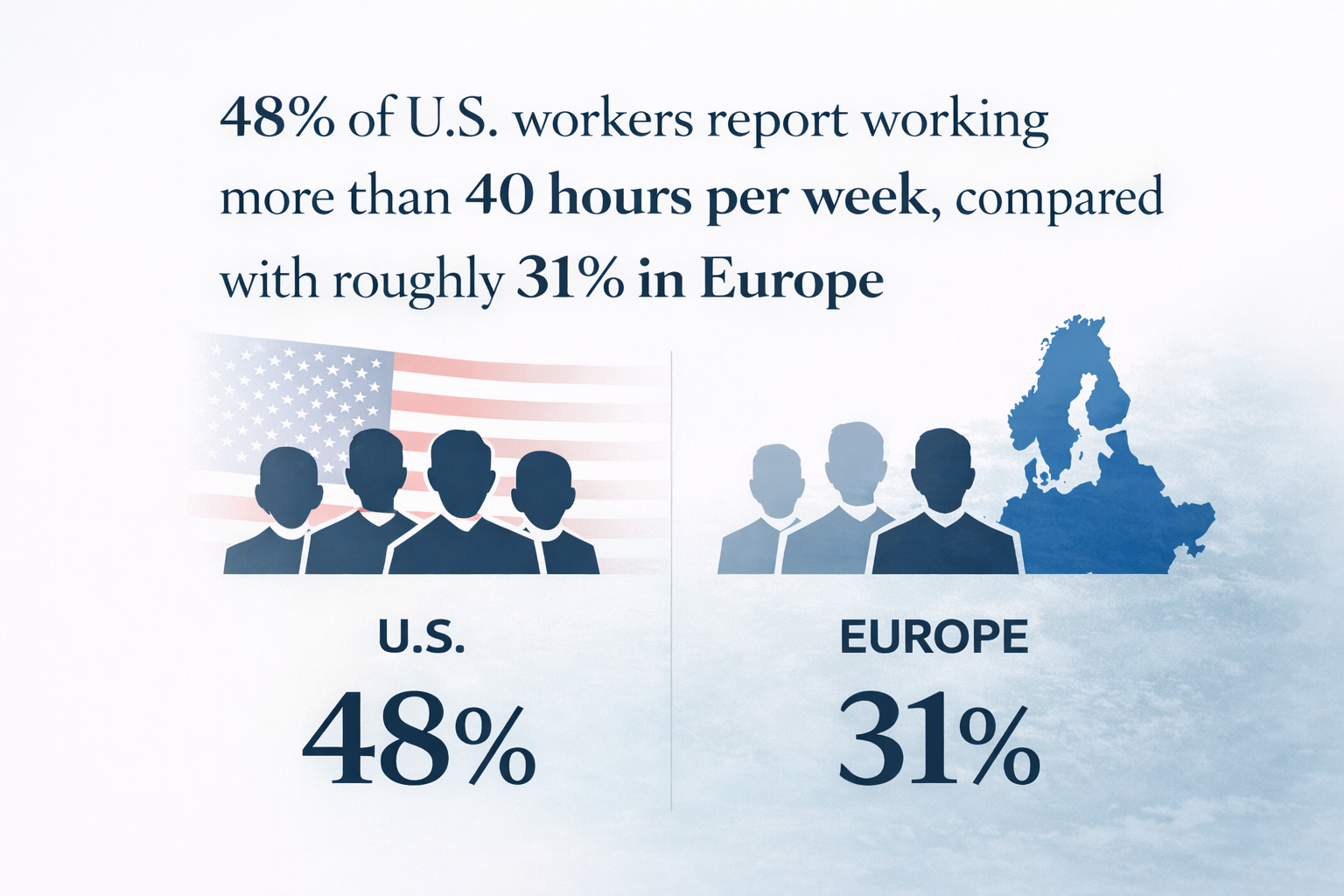
Regional context plays a significant role in how overtime is experienced.
In Europe, despite regulatory frameworks, a meaningful percentage of employees exceed standard limits, while in the U.S., overtime is more normalized due to higher baseline hours and cultural expectations.
The distinction between European and U.S. overtime reflects differences in labor policy and work culture.
What this means for HR and operations teams
Several patterns emerge:
- Overtime by industry is driven by structural pressure.
- Regional differences are influenced by labor policy and culture.
- Average overtime hours provide crucial benchmarking context.
Industry-specific overtime benchmarks are vital for HR leaders.
Without proper context, extended hours may be mistakenly viewed as individual inefficiency rather than a natural outcome of the operational environment. Even earlier studies discovered that 38% of developers consistently worked after hours, indicating a long-standing trend rather than a recent change. This overtime is often associated with sprint deadlines, product launches, and incident responses rather than explicit compensation incentives. The result is prolonged work hours that are commonly accepted and not consistently monitored.
The pressure for overtime extends beyond individual contributor roles to managerial and senior positions. Managers across various industries report more unpaid overtime compared to non-managers. Senior roles involve operational oversight, planning, coordination, and decision-making tasks that often extend beyond regular working hours. As responsibilities increase, off-hours work such as meetings across different time zones and after-hours problem-solving become routine, leading to longer workweeks that are not accurately reflected in official schedules.
For HR and operations teams, analyzing overtime by role and experience level against industry standards, monitoring patterns throughout project cycles, and promoting boundary-setting through cultural cues and policies are recommended strategies. Segmenting overtime data by function can help differentiate temporary spikes from roles where extended hours have become a norm.
Experience level also plays a significant role in overtime patterns. Early-career employees may work longer hours to bridge skill gaps, while mid-career employees take on coordination and mentoring responsibilities that extend beyond core hours. Senior-level employees often engage in strategic planning and decision-making activities outside of formal working hours, leading to unpaid overtime accumulation.
Identifying overtime patterns by experience level can help address underlying issues such as role overload, unclear responsibilities, decision bottlenecks, or insufficient delegation before they result in burnout or attrition. TMetric, a time-tracking tool, can assist HR and operations teams in making overtime visible without invasive monitoring by providing clear timesheets, workload reports, alerts for early risk detection, project-based context, and compliance support. —John D, CEO