


Are you prepared with a selection of email newsletter templates to enhance your email marketing strategy?
If not, you should be.
Studies show that for every $1 spent on email marketing, marketers receive an average return of $42.
In addition to traditional email marketing tactics like promoting sales or rewarding loyalty program members, newsletters can help you establish stronger connections with potential clients and existing customers.
Unlike regular email marketing campaigns that focus on immediate sales, newsletters allow you to share valuable information, showcase your unique perspective, and build deeper relationships with your target audience.
This article introduces you to the 11 best templates available. All you need to do is customize them with your company logo, images, and text, and you’re good to go.
1. 99designs
99designs offers a range of free email newsletter templates that can be tailored to suit your marketing requirements.
Each template is responsive, ensuring that it looks great on any device, whether it’s a desktop, tablet, or mobile phone. The collection also includes templates for various other types of marketing emails, such as personal notifications and promotional emails for sales, events, and other targeted messages.
Simply visit the website, enter your email, and download the email newsletter templates.
Here’s an example:
2. Stripo
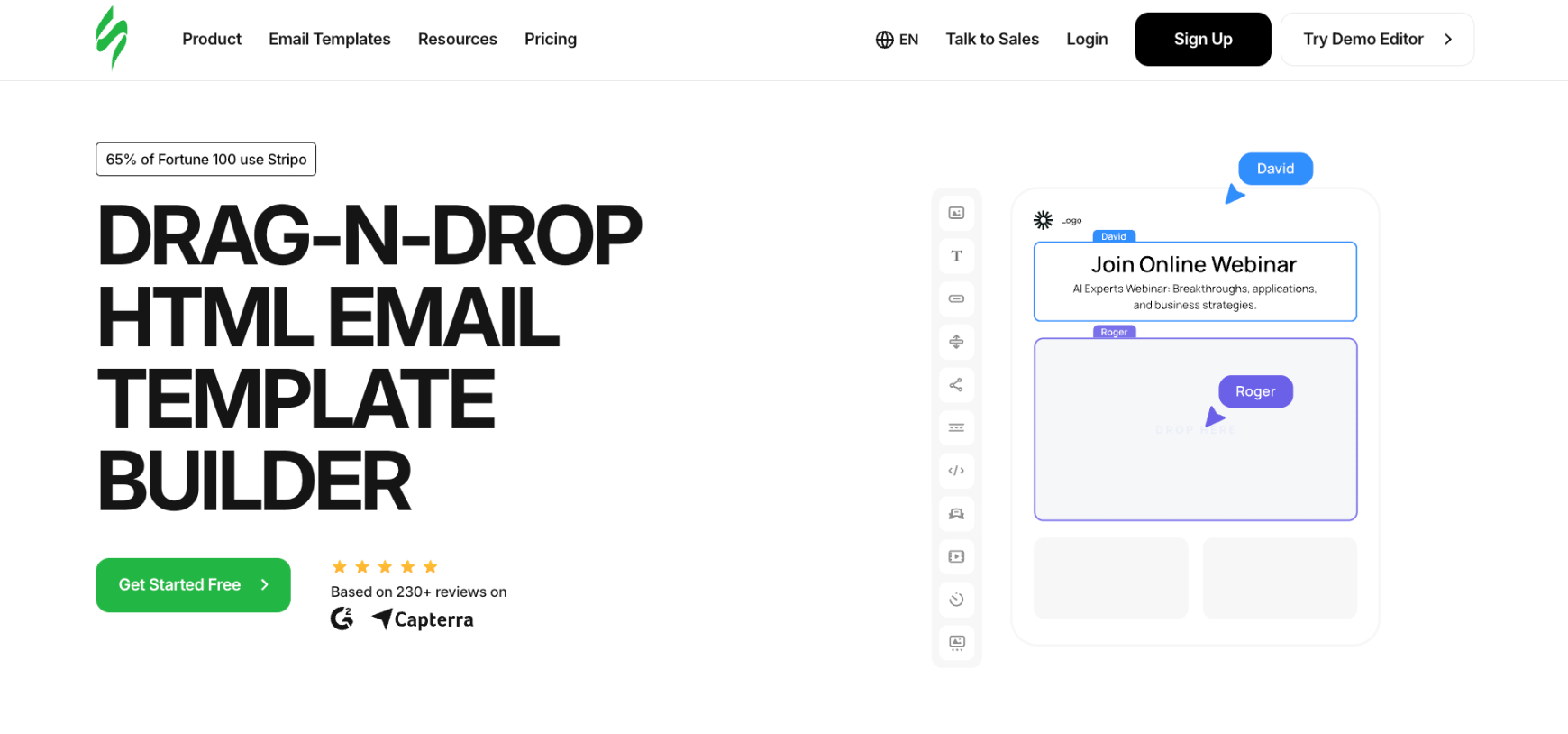
Stripo offers over 300 editable newsletter templates that can be exported to more than 30 email tools, including GetResponse, MailChimp, Campaign Monitor, and Gmail, among others.
What’s even better is that you can filter through their extensive collection based on various criteria, such as:
- Popular templates used by other Stripo users
- Categories like events, holidays, email digests, and new collection announcements
- Industries like Beauty & Personal Care, Fashion, Gadgets, and Pet Care
- Seasons like back to school, summer, Black Friday, Christmas, and birthdays
- Features of the template, such as an accordion menu, photo carousel, CSS animation, or video
3. Cakemail
Cakemail provides a variety of free editable newsletter templates that can be downloaded for use in your email client.
In addition to downloading them for individual use, you can also try them out within the Cakemail platform, which is an email marketing tool designed for small businesses. This allows you to send them directly and monitor their performance.
Here are a few options to choose from:

4. Dyspatch by Sendwithus
Dyspatch by Sendwithus offers open-source, free newsletter templates with more than a dozen themes. Each theme includes several types of emails that share a similar layout and design.
This ensures consistency in your branding and visuals throughout your email marketing campaigns, which can have a significant impact on your results.
5. EmailOctopus on GitHub
GitHub, a popular software development platform, offers a wide range of free, open-source, and responsive newsletter templates. By searching for “responsive email templates” on GitHub, you can find nearly 500 results, including templates from EmailOctopus.
EmailOctopus provides a variety of template packs, such as Karakol, Abacus, and Wayfair.

6. Campaign Monitor
Campaign Monitor, a leading email marketing software company, offers free editable newsletter templates.
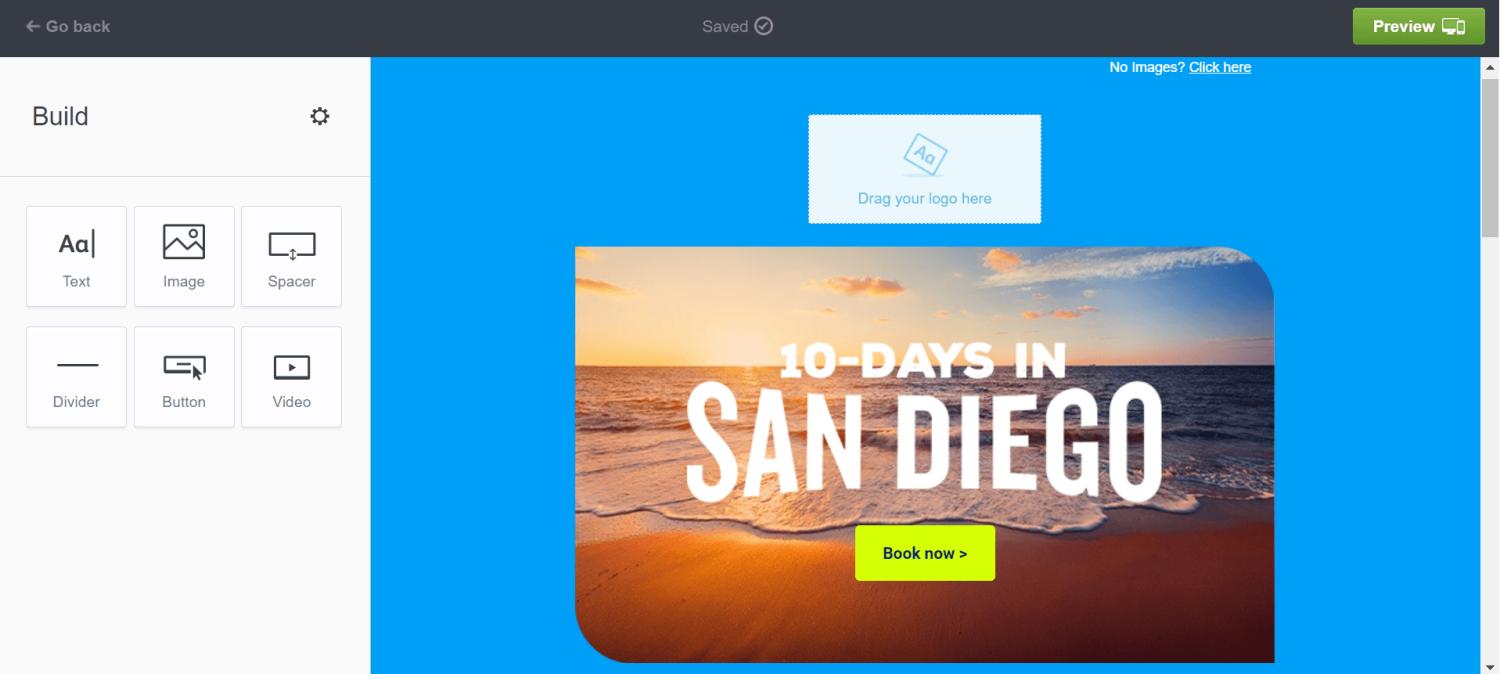
Once you select a template, you can customize it directly in your browser by adding your company’s logo, changing images and colors, and including new modules like videos, buttons, spacers, and dividers.
After customizing your template, you can test it within the Campaign Monitor tool or download it as HTML and CSS for use with your email client.
8. Themezy
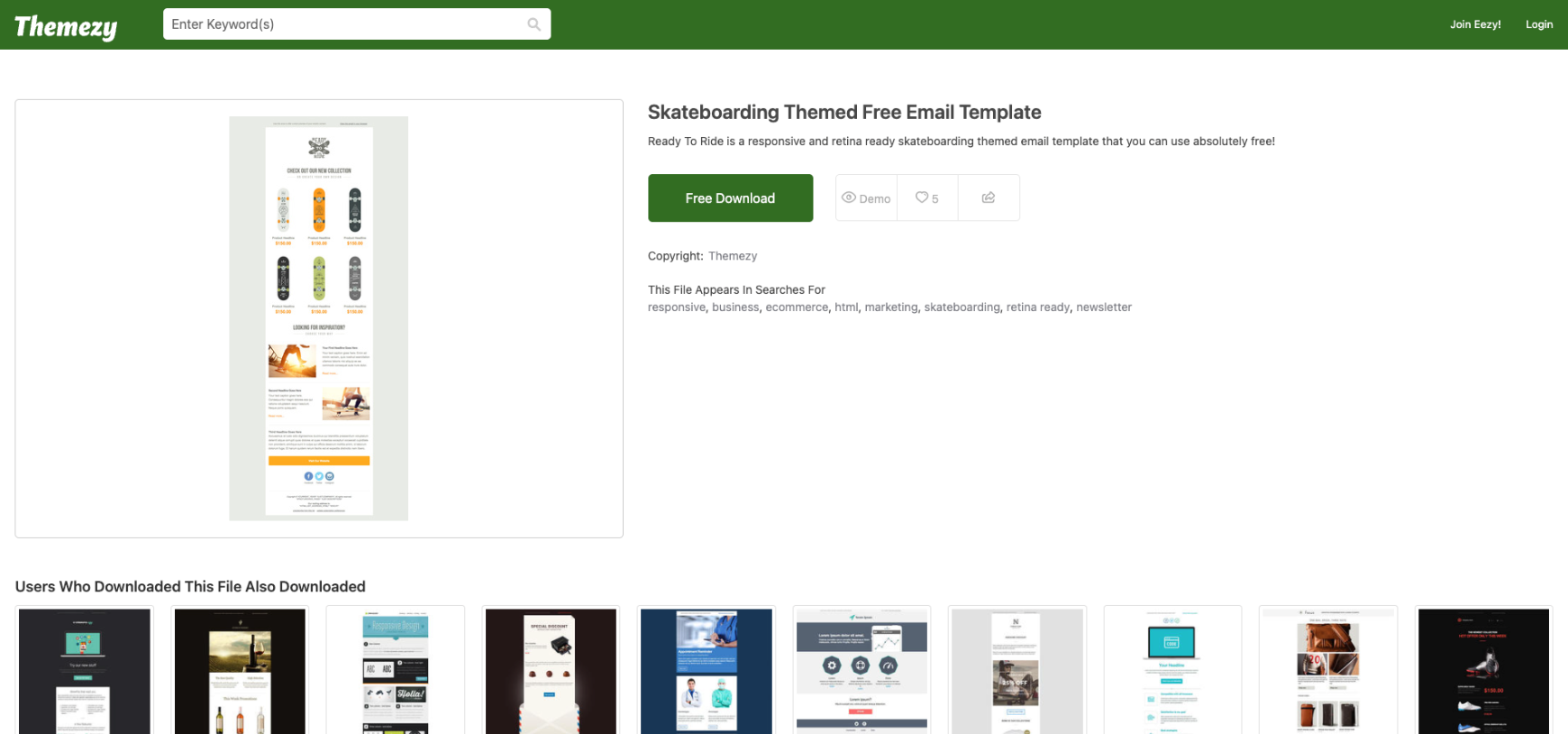
Themezy offers a collection of over a dozen business newsletter templates suitable for various industries and goals. These templates can be used to announce sales, highlight specific products, or keep recipients informed about your company.
Like the other templates on this list, you can download the HTML versions of these email newsletter templates for use with your email software.
Here’s an example of a newsletter template that could be useful for a dropshipping store announcing a new product launch or promoting specific items:
9. TemplateMonster
TemplateMonster offers a wide selection of newsletter templates for under $20. With hundreds of templates to choose from, many of them include multiple modules for each email.
This allows you to maintain your primary branding elements while customizing different modules as needed. For example, a template might include modules for headers and footers, large photo displays with call-to-action buttons, two-column layouts, thumbnails of collections, and smaller modules for additional details.
10. Flashissue
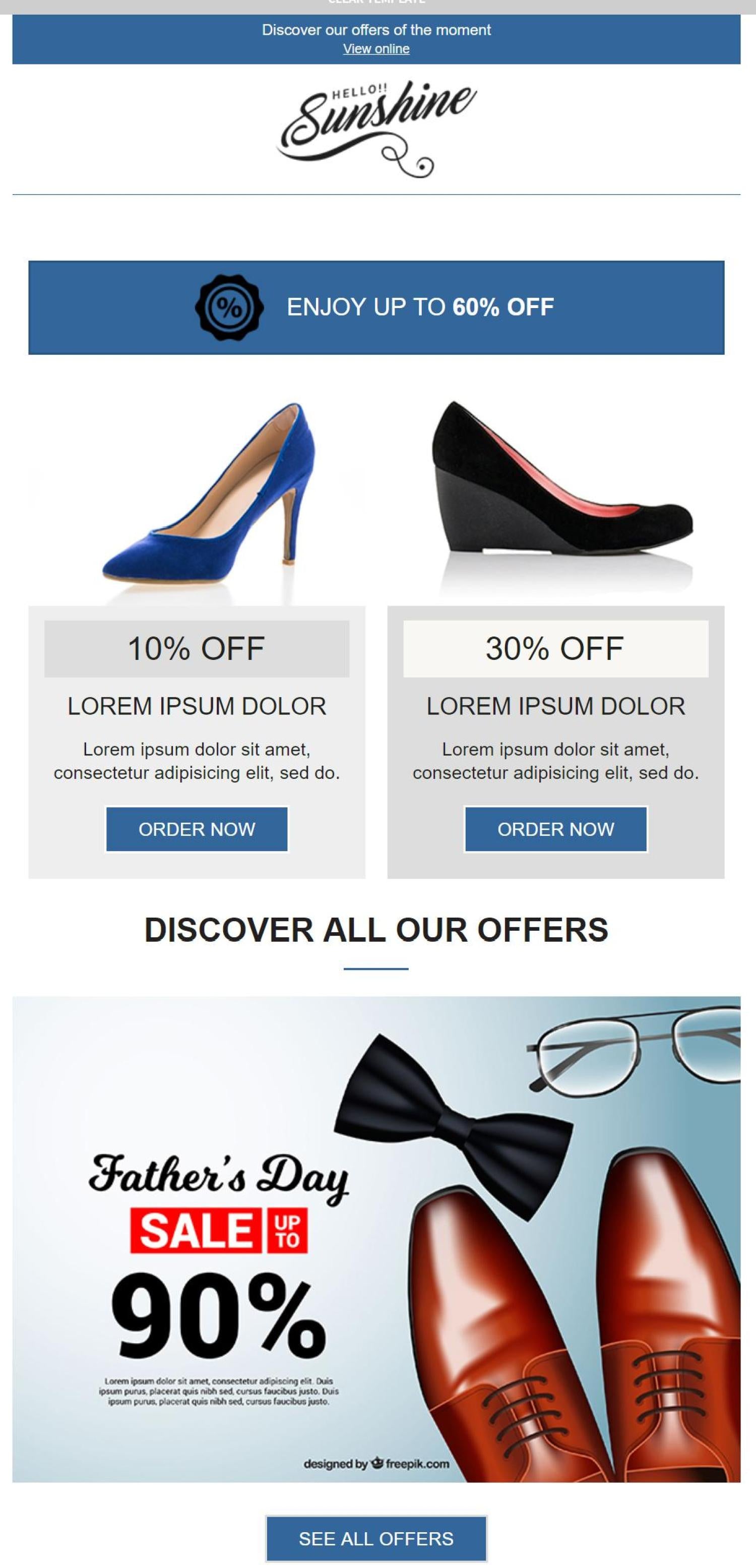
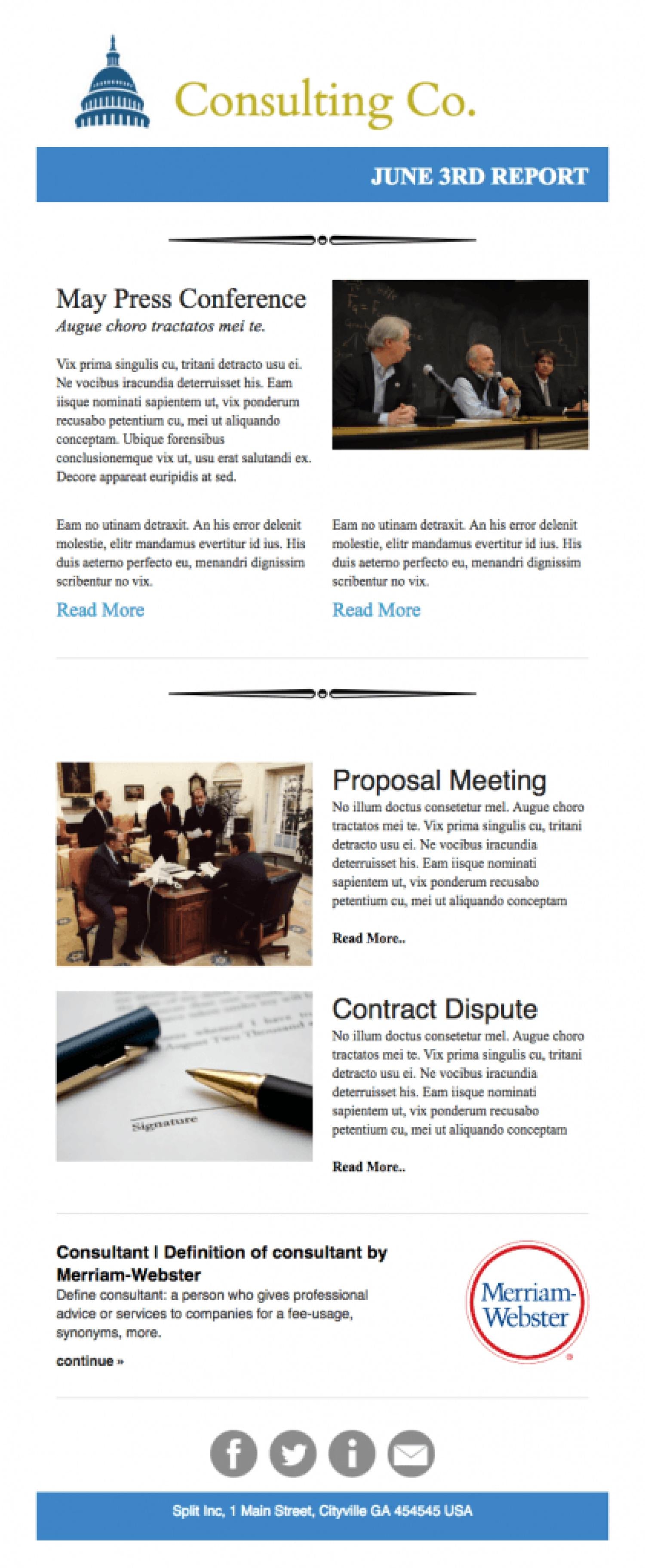
Flashissue offers more than a dozen HTML newsletter templates designed specifically for Gmail. This is a great option for small businesses that are not yet ready to invest in a full-service email marketing platform or a developer for coding assistance.
By connecting directly to your Gmail account as a Chrome app, this tool allows you to customize each newsletter template within Gmail. While the designs may be simpler than others on this list, they can still be effective in conveying your message.
Here’s an example from the Flashissue selection:
11. MJML
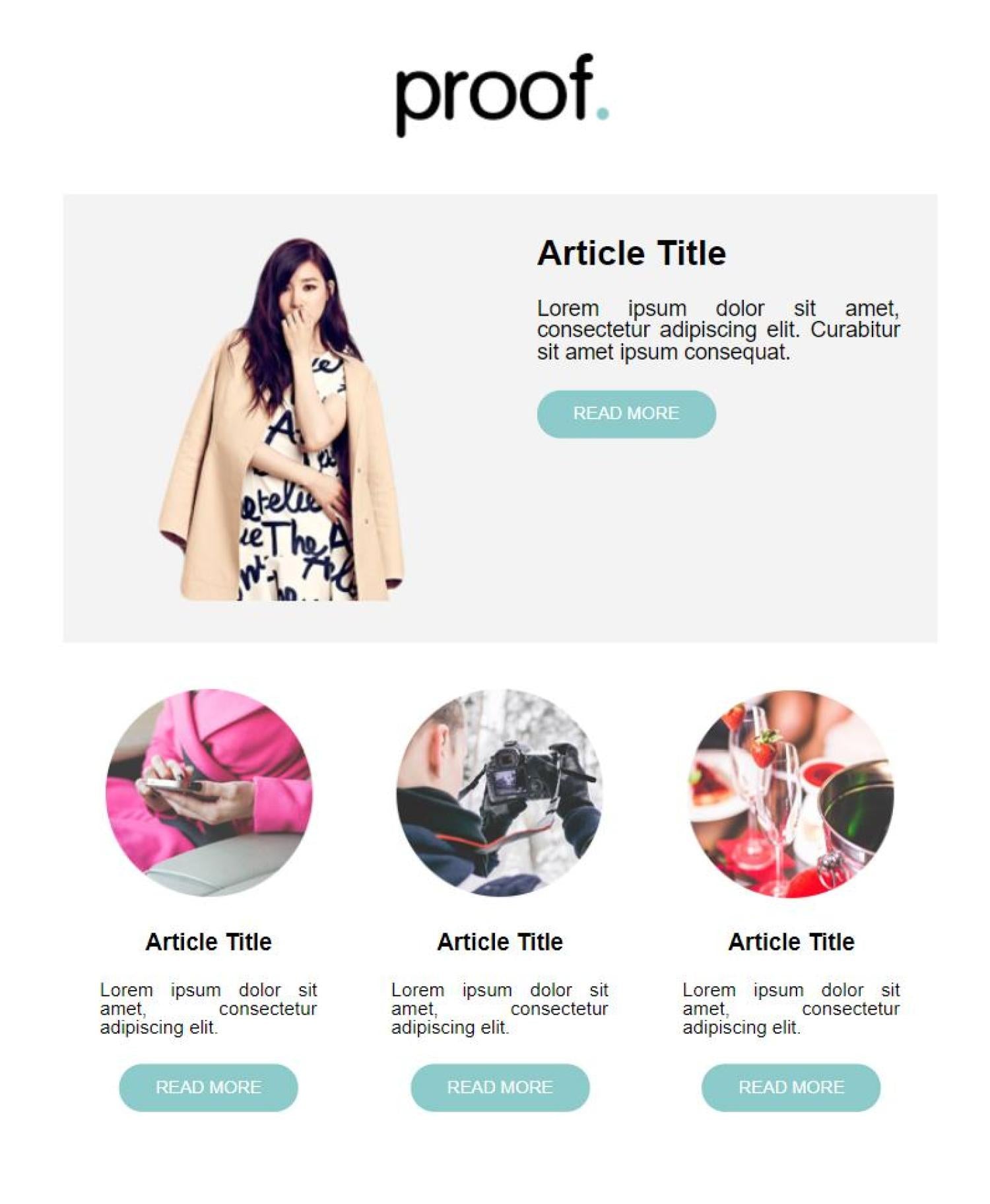
MJML is an open-source framework designed for responsive emails. While it’s ideal for developers who code emails themselves, you don’t need advanced coding skills to use it.
The MJML website allows you to choose from various responsive newsletter templates and even provides a live in-browser editor for customizing the design. Once you’re satisfied with your template, you can convert the MJML code into HTML on the site and paste it into your email tool. MJML offers modern and attractive newsletter templates, like the one shown below:
How to Create a Newsletter Template
While there are many free templates available for download, you may prefer to create your own newsletter template from scratch. Here’s a quick guide on creating a newsletter template in Photoshop and converting it into HTML and CSS for your email client:
Follow these rules when creating a newsletter template:
- Ensure the content width is 600 pixels or less (with margins around the text)
- Create a consistent header featuring your company’s branding
- Keep the design simple, clean, and easy to read
- Use eye-catching graphics to capture readers’ attention
- Include clear calls-to-action directing users to relevant pages
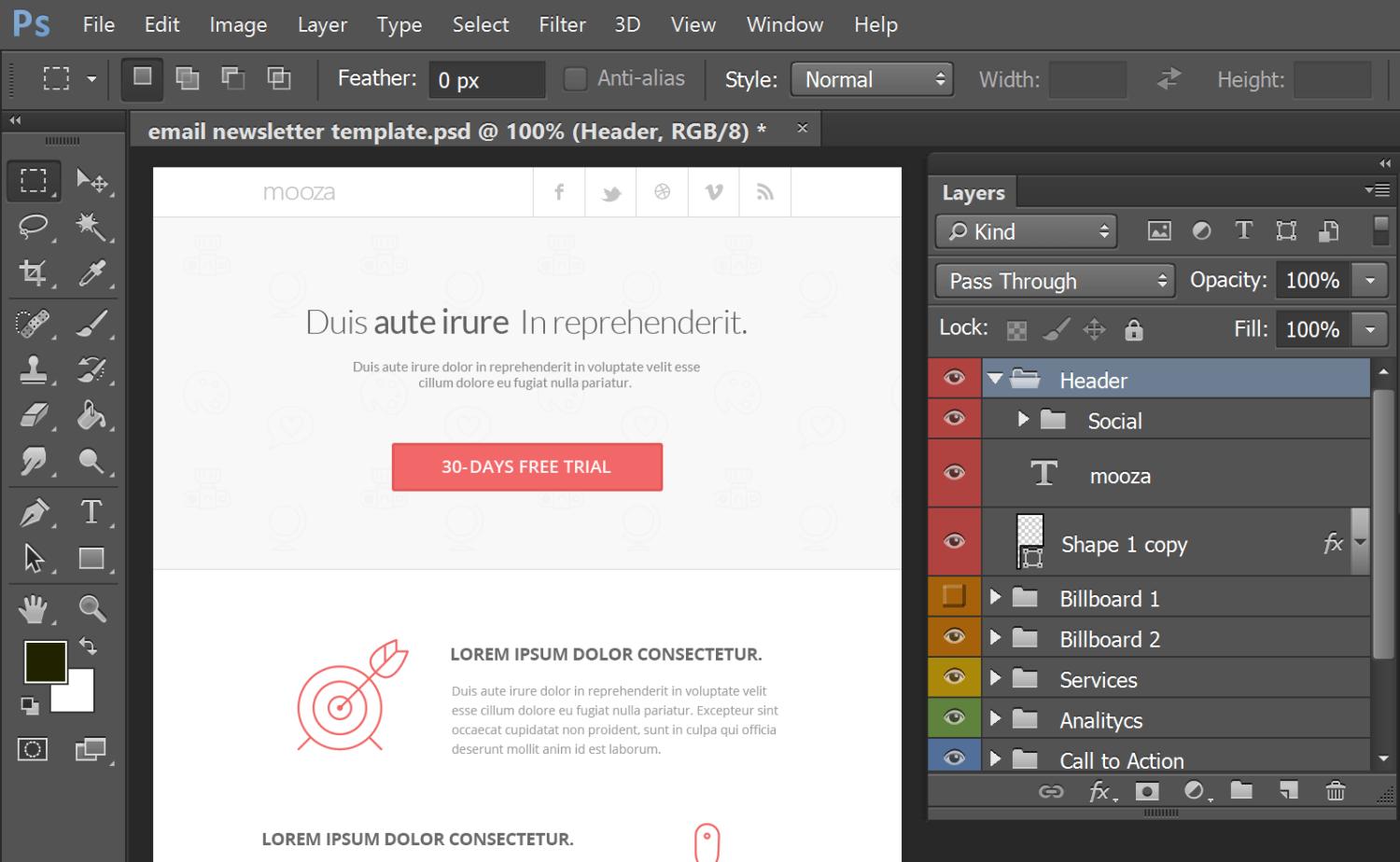
To learn more about creating a newsletter template, let’s examine a free PSD template called Mooza, available for download on Behance.
Here’s the top part of the template:
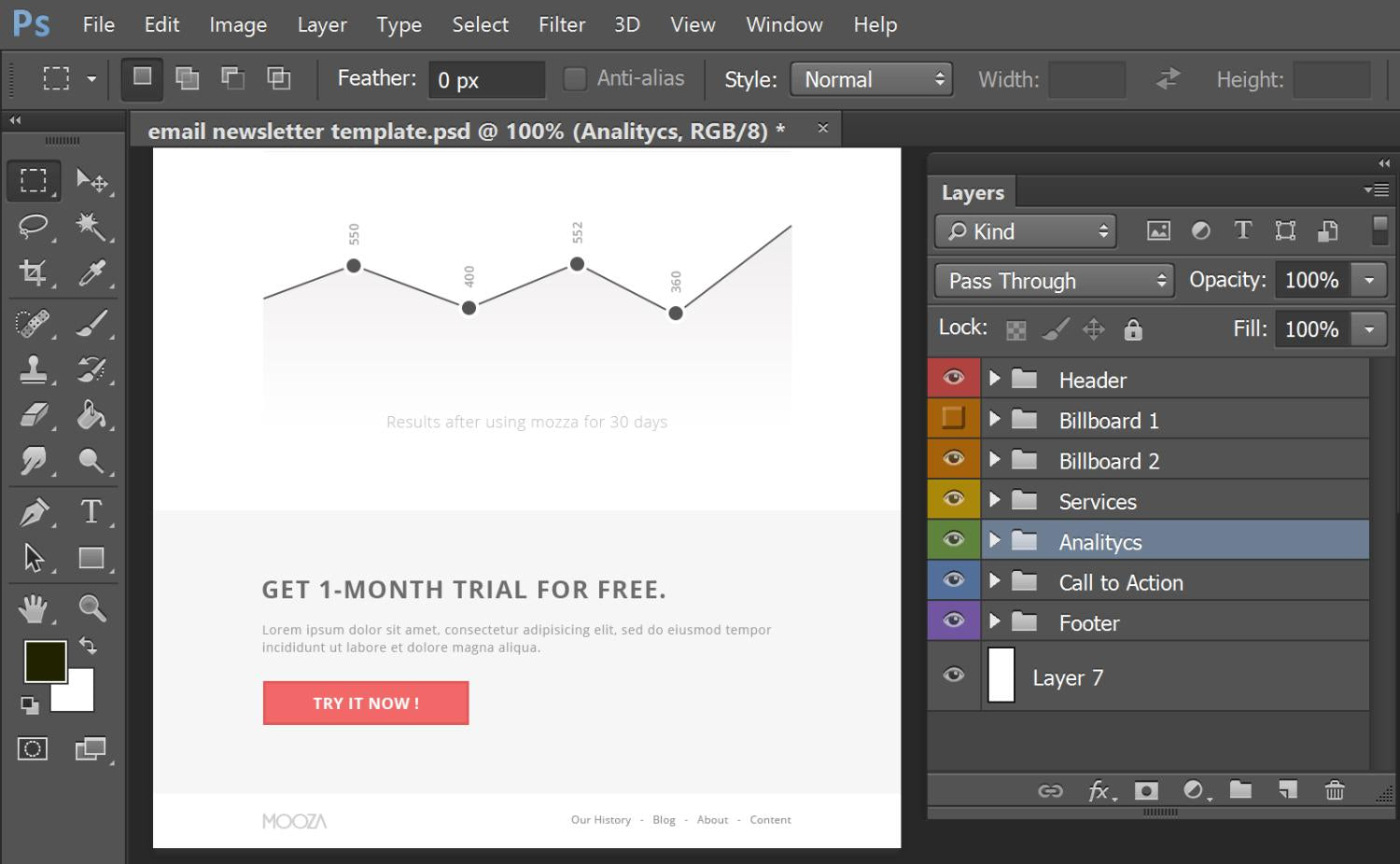
And here’s the bottom part:
In the “Layers” palette, the template is color-coded for easier reference:
- Red layers in the “Header” folder create the header with the logo and social icons
- Orange layers in the “Billboard 1” and “Billboard 2” folders offer two “billboard” options, one with a blank background and the other with a photo background
- Yellow layers in the “Services” folder display three icons in the email body (originally meant for software, but adaptable for other products)
- Green layers in the “Analytics” folder showcase a chart illustrating results for the software’s users
- Blue layers in the “Call to Action” folder present the “Get 1-month trial for free” CTA section at the bottom
- Purple layers in the “Footer” folder show the Mooza logo and links to various pages on the Mooza website
You can edit this PSD file directly or use it as a reference for creating your own newsletter template.
Benefits of Newsletters for Your Business
Newsletters are valuable tools for building an engaged community around your brand and offer unique advantages that can transform how you connect with your audience.
Display Your Company Values
Your newsletter is an ideal platform to showcase what your business believes in. Share stories about your partnerships, provide insights into your operations, or update readers on your community initiatives. This type of content reinforces your company’s values and strengthens relationships with your customers.
For example, if you run an eco-friendly fashion brand, your newsletter could feature stories about your environmentally conscious manufacturing process, tips for extending the lifespan of clothing, or images from volunteer activities your team participates in.
Nurture Customer Connections
Not every visitor to your website will make a purchase immediately. By capturing email addresses, you have the opportunity to stay connected with potential buyers who may not be ready to buy yet.
Newsletter subscribers are valuable prospects for future sales. By maintaining regular contact through newsletters, you keep your brand top-of-mind, increasing the likelihood of repeat business.
For existing customers, newsletters help turn one-time buyers into loyal, repeat purchasers.
Add a Personal Touch to Your Brand
Sharing stories about your company and the people behind it creates emotional connections with your audience. Consider featuring newsletters written in the founder’s voice, or invite team members, experts, and partners to contribute their insights.
Many effective newsletters preview content within the email and direct interested readers to your blog or website for the full story. Depending on your audience’s preferences, you might share your company’s philosophy through detailed articles, visual stories, or video content.
Effective Types of Newsletters
The ideal newsletter format for your business depends on your goals and what your audience finds valuable. Here are several approaches to consider:
Interest-Focused Newsletters
If your business caters to a specialized community, such as crafters, food enthusiasts, or hobbyists, your subscribers likely have a deep interest in your niche beyond just your products.
Cater to these interests by offering newsletters that cover industry developments, how-to guides, or specialized information relevant to your niche.
Lifestyle-Oriented Newsletters
Strong visual presentation can elevate your newsletter to a premium experience that reflects your brand’s aesthetic identity. Lifestyle newsletters emphasize captivating photography, illustrations, or graphic design, so having access to skilled designers is essential.
These newsletters work well for brands with distinctive visual identities and can reinforce your connection to specific lifestyles, communities, or places.
Curated Product Collections
Product collection newsletters, such as wish lists, gift recommendations, or staff picks, offer subscribers a glimpse into aspirational lifestyles. Collections curated by your team are particularly effective for brands known for their taste and style.
You can also feature selections from influencers or brand ambassadors. To maintain authenticity, avoid overwhelming these roundups with your own products.
Consider expanding curated collections beyond physical products to include recommendations for books, entertainment, activities, and experiences.
How-To Guides
Newsletter guides provide an excellent opportunity to showcase your expertise while encouraging readers to think about your brand in related contexts.
For example, a kitchenware company might share restaurant recommendations for specific cities, bridging the gap between dining out and cooking at home.
Guides can inspire potential customers to subscribe, as they promise valuable, actionable information.
Blog Content Compilations
You can compile articles from your company blog into newsletters that serve as mini digital magazines. To drive traffic to your website, provide previews of blog posts rather than including full articles in the email.
This approach allows you to repurpose existing content, saving time on newsletter creation. Consider your newsletter when planning blog content, and vice versa. You might create blog posts with captivating images that will catch readers’ attention in an email, or select popular blog posts that resonate with your audience.
Theme-Based Newsletters
Themed newsletters are best suited for brands with devoted followings, as readers should be interested in your content beyond just your products.
If you’re a visible founder, you can present these newsletters as personal messages or notes from leadership.
Themed newsletters help translate the personality of physical retail locations into digital experiences for online shoppers.
Newsletter Best Practices
Creating engaging newsletters requires attention to several key elements. Here are essential practices to follow:
Select Your Platform Carefully
Choosing the right platform is crucial for building and distributing newsletters. For ecommerce businesses, platforms that integrate with your store offer significant benefits, enabling you to send targeted newsletters to specific customer segments.
For instance, a business selling both finished products and DIY kits likely has two distinct customer groups interested in different content. Customers who purchased DIY kits may appreciate detailed tutorials, while those who bought finished products may not.
Platforms designed for editorial content can help readers view your newsletter as valuable content rather than promotional material. Some platforms even feature comment sections, allowing readers to engage with each other and your brand.
Choose a Design That Reflects Your Brand
To maintain consistency across all touchpoints, your newsletter design should align with your brand identity. Consider your visual elements, such as typography, logo, color palette, and incorporate them into your newsletter layout.
Many platforms offer customizable templates that make this process easy, even for those without design expertise.
Establish a Consistent Schedule
When determining how often to send newsletters, strike a balance between staying top-of-mind with subscribers and avoiding content overload. This becomes especially important if you’re also sending other marketing emails.
To maximize engagement, consider sending a newsletter once a week. Weekly newsletters tend to have higher open and click-through rates compared to other frequencies.
Consistency is key, so choose a schedule you can maintain. Subscribers will anticipate your newsletter on specific days, building trust and reliability.
Promote Your Newsletter
Ensure potential customers are aware of your newsletter and can easily subscribe. Create a dedicated sign-up page and include links to it on your website and social media profiles.
Offer incentives for email sign-ups, such as welcome discounts or exclusive benefits like early access to products or premium content.
Deliver Quality, Relevant Content
To differentiate your newsletters from standard marketing emails, include engaging content alongside product promotions. This content should provide value to readers, regardless of whether they’ve made a purchase.
Make your content easy to digest by using clear, concise copy and incorporating images. You might include a range of content, from detailed brand stories to video tutorials on product


